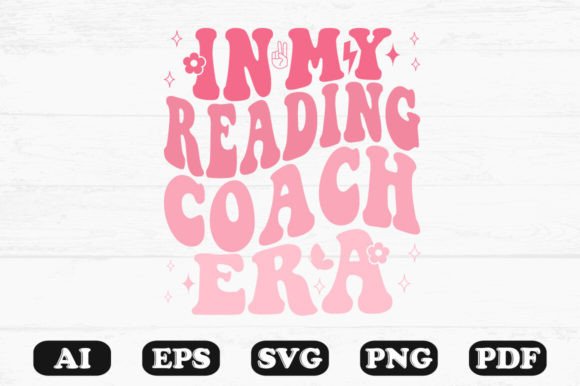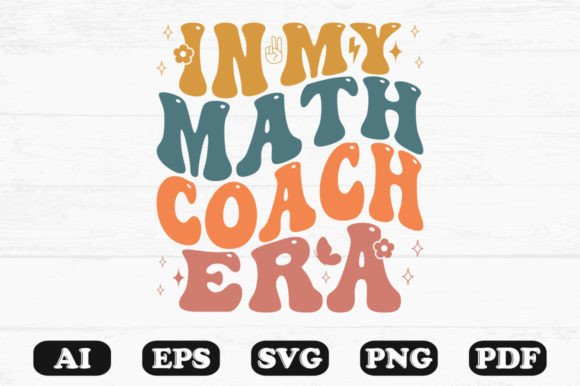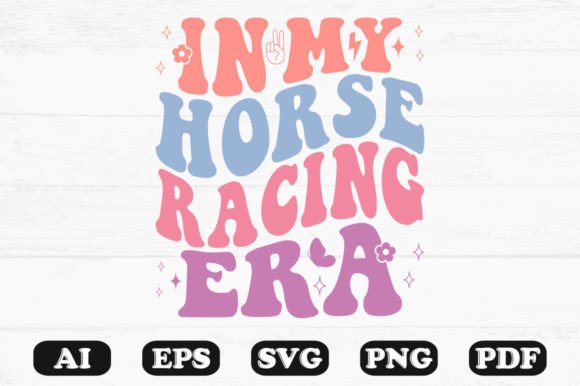
In My Academic Coach Era Retro Wavy SVG
First Impressions: A Nostalgic Whisper, Not a Shout
Opening In My Academic Coach Era Retro Wavy SVG feels like flipping through a well-loved 90s study guide—warm, slightly irreverent, and quietly confident. The wavy baseline gives it rhythm without chaos; the typography leans into retro charm but avoids cartoonish exaggeration. It’s not shouting “I’m vintage!”—it’s leaning in with a knowing smile. As an embroidery designer who’s stitched hundreds of text-based designs, I immediately scanned for what matters most in thread: letter spacing, curve integrity, and negative space. This one breathes. That’s rare in wavy text SVGs, where tight waves often collapse under stitch density or distort on curved surfaces like caps or tote bag handles.
A Real Project Test: Embroidering a Linen Tote for a Graduation Pop-Up
Last week, I prepped a small-batch run of linen tote bags for a local graduation pop-up—targeting proud parents and soon-to-be grads who appreciate wit over cliché. I chose In My Academic Coach Era Retro Wavy SVG for its balance of personality and polish. But before hooping, I asked: Will this read clearly at 4.5 inches wide on natural linen? Will the curves hold up with satin-stitched outlines and light fill? The answer was yes—but only after thoughtful prep.
Where It Shines (and Why)
- Custom apparel & sweatshirt embroidery: Its moderate height and open letterforms prevent crowding on midweight fleece or cotton blends. No tiny serifs to vanish in dense fill stitch.
- Tote bag design & aprons: The wave adds movement without sacrificing legibility—even at 5–6 inches wide, it reads cleanly from across a craft fair table.
- Personalized gifts & boutique branding: It carries tone without overcommitting—ideal for academic-themed baby embroidery (think onesies with “Future Professor” in soft pastel thread) or teacher appreciation gifts.
- Digital embroidery file versatility: As a clean vector-based SVG, it converts reliably to PES, DST, or EXP when prepped correctly—no jagged edges or unintended nodes.
Where to Proceed With Care
This isn’t a “set-and-forget” embroidery file. Its charm lives in its curves—and curves demand respect in thread.
- Small hoop sizes (under 4"): Avoid shrinking it below 3.75". Tight waves compress, risking stitch overlap and thread nesting—especially on thin fabric or baby embroidery projects.
- Textured or stretchy fabric: On terry cloth towels or lightweight knits, stabilize aggressively. The wave’s flow can blur if the fabric shifts even slightly during satin-stitch outlining.
- Dark fabric & thread contrast: Test black thread on navy twill—it works, but subtle gradients in the wave’s contour may mute. For maximum clarity on darks, consider a 1–2pt white underlay or switch to a bold off-white thread.
- Curved surfaces (caps, curved pillow covers): The wave’s natural arc helps here—but always rotate the design to match the garment’s curvature. Don’t force it top-to-bottom on a front cap panel; align the wave’s peak with the crown’s highest point.
What It Adds to Your Handmade Product—Beyond Aesthetics
In My Academic Coach Era Retro Wavy SVG doesn’t just look good—it elevates perception. Customers browsing Etsy or a local shop don’t just see text; they sense intention. That slight retro tilt says “thoughtful curation,” not mass-produced clip art. In a sea of generic “Graduate 2024” designs, this one sparks recognition—and a smile. That builds trust. It also supports brand consistency for creative entrepreneurs: pair it with minimalist monograms or subtle icon accents (a tiny mortarboard, open book), and you’ve got a cohesive line for graduation season, back-to-school merch, or faculty appreciation bundles.
Practical Embroidery Designer Notes You Can’t Skip
- Always test on scrap fabric first—especially if stitching on linen, canvas, or textured tea towels. Watch how the wave’s lowest points settle into the weave.
- Check thread color contrast in natural light, not just your screen. What looks vibrant on a mockup may dull on oatmeal-colored organic cotton.
- Review stitch density before finalizing. If your machine defaults to heavy fill, reduce density by 10–15%—this design thrives on airiness, not weight.
- Confirm hoop size compatibility. While scalable, avoid stretching it beyond 8 inches unless you’re using high-tensile thread and double-layer stabilizer.
- Inspect small details in black-and-white mockups. Does the wave still read as intentional, or does it flatten into ambiguity?
- Compare performance on light vs. dark fabric backgrounds. Adjust underlay or thread choice accordingly—not just for visibility, but for tactile feel.
- Use tear-away + cut-away hybrid stabilizer for structured items (totes, aprons); opt for lightweight cut-away alone on baby clothes or delicate knits.
- Verify licensing terms before listing finished embroidered products or reselling digital files. As a Graphics asset in the Crafts category, its commercial use rights matter for Etsy sellers and small shop owners.
Final Thought: A Design That Earns Its Place
In My Academic Coach Era Retro Wavy SVG isn’t flashy—but it’s reliable, expressive, and quietly distinctive. It fits naturally into real embroidery projects: the embroidered patch sewn onto a grad’s backpack, the custom sweatshirt worn proudly at orientation, the kitchen towel gifted to a retiring professor. It earns its spot not by demanding attention, but by holding it—gracefully, authentically, and with just the right amount of wavy wisdom. For craft business owners and handmade product creators, that kind of quiet confidence is worth more than any trend.